Your Ultimate Guide to Using AI Responsibly
The way you use AI today will have a significant impact on your life in the future, and that future may be nearer than you think. Like every technology, AI was invented to improve human lives. The only way we can ensure that AI fulfills its noble mission is by using it responsibly; otherwise, it can ruin our lives. Like everything else in life, AI is a double-edged sword: it can hurt and heal. This article’s mission is to help you make the best choices when using AI.
What Does Using AI Responsibly Mean and Why Does It Matter?
The Cambridge Dictionary defines “Responsibly” as “In a way that shows you have good judgment and can be trusted.” Based on this definition, we should demonstrate good judgment in how we use Artificial Intelligence.
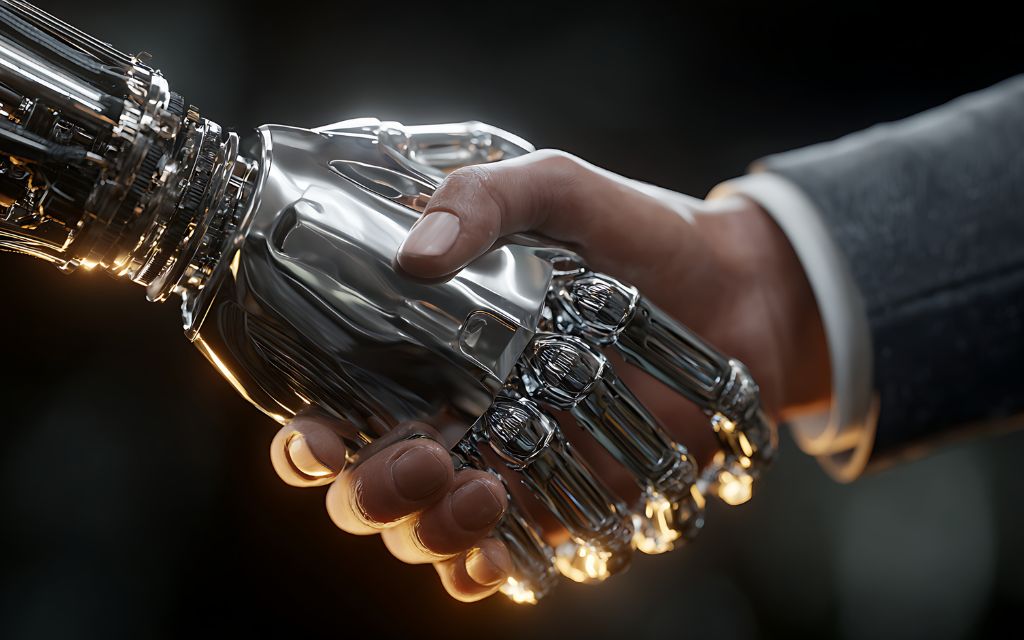
Responsible AI use matters because the consequences of not using artificial intelligence responsibly can be catastrophic! Any sensitive information or data you share with AI can be exposed, and your financial and social lives may be impacted in an undesired way.
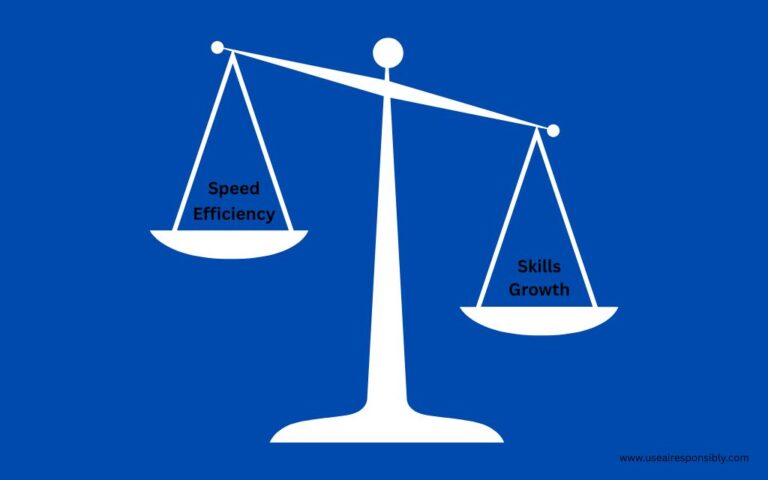
Furthermore, any irresponsible use of AI may harm your academic and professional lives. You may become overly dependent on artificial intelligence and stop using your God-given capacity to think critically in challenging situations. Artificial intelligence is intended to make us smarter. We should, therefore, use it as a tool, not a replacement for our brains. AI should be used as a copilot with you being the leading pilot.
To effectively leverage AI’s potential and avoid its challenges, let’s explore 7 ways we can use artificial intelligence responsibly.
7 Ways to Use AI Responsibly
Using artificial intelligence responsibly may sound like restricting ourselves, but it is not the case. Let’s illustrate that with something more familiar: you and I should use our time and resources responsibly, which means we need to prioritize the most important things in our lives and use our resources in a way that can contribute to our joy as well as the joy of those we care about. How does that sound?
Here are some of the ways you and I can use AI responsibly:
- Prioritize Human Supervision: AI should serve as a tool to support your judgment and decision-making, rather than replacing critical thinking. It may not be obvious to us when we start replacing critical thinking with AI, but if we realize that we consistently trust AI more than ourselves in everything and feel like we’re not capable of identifying flaws in AI, this suggests that we’re replacing our power to think critically with artificial intelligence.
- Verify AI-Generated Content: Cross-reference information provided by AI with reliable sources to avoid spreading misinformation. This is, by far, the most important aspect of using AI responsibly because misinformation goes farther than our physical voices can reach. Therefore, it is imperative to fact-check AI-generated responses before sharing them with the rest of the world.
- Protect Privacy and Data: Be mindful of the information you share with AI tools. Never share sensitive and/or proprietary information with artificial intelligence. Read their privacy policies carefully and only input publicly available data/information into artificial intelligence tools. Remember, you can’t be too careful when it comes to protecting yourself and others from harm.
- Acknowledge AI’s Limitations: Recognize that AI can make mistakes and it doesn’t know everything. This understanding can motivate you to both prioritize human supervision and use AI for things that it can actually help with.
- Use AI Ethically and Fairly: Avoid using AI for malicious purposes such as discrimination, academic dishonesty, or harmful initiatives.
- Be Transparent: When you use AI to generate content, be transparent about its involvement and contribution where appropriate. Disclosing AI’s contribution is important because it can help you build trust. Your audience will appreciate your transparency more than you can imagine.
- Limit Your Daily AI Use or Interactions: This is the second most important thing that I would like you to remember from this article: you should prioritize real-world connections. Don’t spend too much time during the day using artificial intelligence. Instead, pay close attention to the world around you, interact with other humans, and be there for your friends and loved ones; nothing can or should replace that.
Furthermore, you need to stay informed about changes in the AI industry. Be aware that ethical guidelines and responsible usage practices may change as the technology evolves. You can do this. WE can do this!
As we consider these responsible practices, it’s also helpful to understand the nuances in the AI field, starting with the distinction between ethical AI and responsible AI use.
Is There A Difference Between Ethical AI and Responsible AI Use?
Yes, there is a difference between ethical AI and responsible AI use. Well, kind of. Let’s explore that together:
The Merriam-Webster Dictionary defines “Ethical” as “Conforming to accepted standards of conduct”, which also means “Moral standards”. Therefore, “Ethical AI” has to do with morality, standards, and honesty. Whereas “Responsible AI” refers to best practices when using this tool: what you should and should never share with AI, in what environment/context AI should and shouldn’t be used, etc.
AI developers need to follow the “Accepted standards of conduct” when developing an artificial intelligence tool. Developers must be transparent and honest with AI users in communicating their methods. AI users must properly tag anything that they created using AI. Both users and developers should use AI responsibly to protect themselves and others.
As AI transforms key sectors like education and the workplace, understanding these foundational principles becomes more essential.
How AI Is Changing Education and the Workplace
Artificial Intelligence is transforming both education and the world of work. These profound shifts in how we learn, teach, and perform our jobs are happening so fast that it’s almost scary to think about. Some teachers are wondering whether or not it is a good idea to integrate artificial intelligence into the classroom, while others are asking how much AI use in the classroom is too much. Certain employees are losing their jobs to AI, while others are getting paid more for their expertise in using AI.
More than a simple tool, AI is becoming an integral part of the learning ecosystem and the workplace.
Personalized Learning
Students can use AI to learn about any subject from the comfort of their smartphones. They have access to more information than ever. Students can also use AI to practice before taking a test or an exam, which gives them a better chance of performing well in the exam.
AI is not just changing how we educate; it’s redefining the nature of work itself.
Automation of Repetitive Tasks
Many routine and repetitive tasks across industries are being automated by AI, which increases efficiency and promotes consistency. AI also allows companies to improve their customer service. The number of companies integrating AI into their business operations increases every day.
Those who consider artificial intelligence a threat and do nothing but freak out are the ones who will be unemployed soon. But if you see AI as an opportunity to become even more marketable, competent, and competitive, you will triumph in this AI era.
To fully leverage AI’s potential, it’s essential to address common misconceptions. Your understanding of artificial intelligence influences how you use this powerful tool. With that said, let’s address some frequent misconceptions:
Common Misconceptions About AI
Your perspective on artificial intelligence influences the way you use this useful tool. Here are some of the most common misconceptions about artificial intelligence:
- For students: “AI can do anything, including my homework.”
- For teachers: “AI will replace teaching.”
- For parents: “AI is too advanced for kids.”
- For students: “AI knows everything.”
- For parents: “AI is scary!”
- For teachers: “AI will make students lazier”.
I must admit that these misconceptions about AI may become your reality if you don’t use AI responsibly. To prevent these misconceptions from becoming harmful realities, particularly for the younger generation, we can’t afford to ignore the role of adults and parents in encouraging their children to use AI responsibly:
How Can Parents Help Their Children Use AI Responsibly?
With or without your direct supervision, your child will be exposed to artificial intelligence. Now, would you feel comfortable knowing that your child is using AI to copy and paste their schoolwork? Cheating is never a good behavior. Do you think it’s better for your child if you avoid having a conversation with them about AI? Believe it or not, artificial intelligence is here to stay. The sooner you do the following things, the better:
- Educate yourself regarding artificial intelligence: Before anything else, you need to educate yourself. Learn about AI, what it is, how it works, how it can help your child, and what the potential risks are.
- Have an open communication with your child about AI. Listen to what they have to say.
- Set clear boundaries and expectations for AI use, similar to rules for screen time.
- Encourage your children to question AI-generated content and understand its limitations.
- Show your children how to use AI responsibly by showing them the difference between irresponsible and responsible scenarios.
- Explore AI tools together and discuss which tool is best at certain things than others.
- Encourage creativity and problem-solving that doesn’t rely on AI.
- Stay informed about AI developments and discuss them with your children.
- Teach your children what data or information to never share with an AI tool and what the consequences are.
In addition to parental guidance, teachers also play a vital role in helping the younger generation become responsible AI users.
How Can Teachers Help Their Students Use AI Responsibly?
The integration of Artificial Intelligence into education presents both opportunities and challenges. To ensure students take advantage of AI’s potential while mitigating its risks, educators can guide their students toward responsible AI use by:
- Establishing clear guidelines: Develop and communicate clear policies regarding the appropriate use of AI in assignments, research, and general learning. This should include what constitutes academic dishonesty when using AI tools. Each study may sign a paper that contains all the rules for the use of AI in and outside of the classroom.
- Discussing intellectual property and plagiarism: Educate students on copyright, fair use, and the ethical implications of using AI to generate content without proper attribution or understanding.
- Emphasizing data privacy and security: Teach students about the importance of protecting personal information and sensitive data when interacting with AI tools. Discuss the potential risks of sharing private information with AI systems.
- Demonstrating how to use AI tools effectively and ethically in your own teaching and learning processes.
- Using AI to enhance learning, not replace it: Introduce AI tools that can assist your students in research, brainstorming, and/or language learning, but always within the context of enhancing critical thinking and problem-solving skills.
- Creating a safe environment for students to experiment with AI tools safely.
- Teaching them how to prompt artificial intelligence correctly.
- Facilitating open discussions about AI: Create opportunities for students to discuss their experiences, concerns, and insights about AI in a classroom setting.
- Collaborating with parents to ensure a consistent message about responsible AI use at home and school.
Remember, you know your students better than anyone. You’ll know what works best for them and what approach could be the most effective. Be patient with yourself and your students, and then you’ll see the desired results or better outcomes than what you anticipated. And remember, your students look up to you. No pressure!
Since everyone needs skills and practical approaches for responsible AI use. Let’s look at the essential skills students, teachers, and parents need, followed by practical tips for effective AI engagement:
Essential Skills for Responsible AI Use
- Student, you need: Critical thinking, creativity, digital literacy, and ethical awareness.
- Teacher, you need to: Know how to use AI responsibly and model responsible AI use.
- Parents, you have to: Be able to encourage curiosity, set boundaries, and ask good questions.
Practical Tips for Students and Educators Who Want to Use AI Responsibly
- Use AI as a tool to improve your critical thinking skills and knowledge.
- Never make artificial intelligence do your school work for you.
- Learn how to prompt AI effectively.
- Avoid copying and pasting content from artificial intelligence.
- Get ideas from AI, but use your own words to avoid plagiarism.
- Read the Privacy Policy as well as Terms and Conditions for the AI tools you’re using.
- Pay attention to settings and features that allow you to protect your data and privacy.
- Create and use a custom AI agent for different purposes and tasks.
- Use AI to explore the world of learning opportunities that are available to you.
- Fact-check AI output as often as necessary.
- Explore as many AI tools as you can; that will help you pick your favorite AI tools or chatbots based on their performance.
- Be curious and cautious at the same time when it comes to artificial intelligence tools.
- The way you use AI today can determine the kind of professional you’ll become.
- AI is NOT a person. It doesn’t have feelings. It is NOT your friend. Therefore, your use of or interactions with AI shouldn’t replace human connections.
- Take a break from AI as often as possible to spend quality time with your friends and family members.
Now, let’s explore valuable resources designed to help students, teachers, and parents navigate the world of AI responsibly.
Resources for Students and Teachers
Downloadable Resources for Students and Parents
Downloadable Resources for Parents
Recommended Tools for Teachers and Students
- NotebookLM: An AI tool from Google that allows teachers to upload resources like PDFs, websites, and videos, and then generate study guides, timelines, summaries, and interactive content.
- Gemma App: Gemma is an AI-powered tool that allows you to create presentations within seconds using prompts, collaborate on projects, share your work with others, etc.
- Gemini in Classroom: Offers over 30 AI tools to help generate content, brainstorm ideas, create quizzes, generate lesson plans, and provide real-world examples for students.
- SchoolAI: This all-in-one platform offers six classroom-ready tools, including lesson planning assistants, personalized learning activities, real-time student support chatbots, and features for resource organization and feedback.
- MagicSchool: Provides a wealth of AI-powered ideas, lesson materials, and classroom management solutions designed specifically for educators.
- Snorkl: This AI-powered tool allows students to verbally and visually explain their thinking and uses AI to provide instant personalized feedback. Teachers can also get insights about their students: their learning gaps and successes, etc.
There are several other AI-powered tools for teachers out there, but I only mentioned these because they are particularly useful. Now, it’s time to wrap up.
Conclusion: Using AI Responsibly
Responsible AI use is a shared journey. Artificial Intelligence is an exciting tool with the potential to become addictive because of how quickly you can get what you need and how easy it is to access AI tools. It is, therefore, important to be intentional about our AI use and cautious at the same time. Responsible AI use matters. Ethical use of artificial intelligence can help you keep yourself and everyone else safe build trust.
Be aware of the common misconceptions and all the practical things you can do to become a responsible AI user. Parents and teachers watch over the younger generation, allowing them to use AI responsibly and ethically. Remember, students and youth develop or grow better when adults guide, not control, their learning. Let’s embrace responsible AI practices today; by so doing, we can pave the way for a future where technology empowers humanity instead of threatening our survival.
Did you learn anything valuable from this article? If you did, please comment and share this blog post with two other people in your network.
Important Disclaimer:
AI was used to create the outline of this article, but the content was written by a human.
Join The Responsible AI Users List.
Be among the first to receive tips and resources on responsible AI use right in your inbox every two weeks!